Latest in the record
Factor-E
Visualization becomes a projection, not an authority
The orchestration graph can be rendered through LangGraph-compatible views while the canonical mission record remains the system of record.

 eooo.io
Ezra Ter Linden / Independent experiments
AI systems, software experiments, and ideas that escaped the notebook. The work, the wrong turns, and what comes next.
Enter the index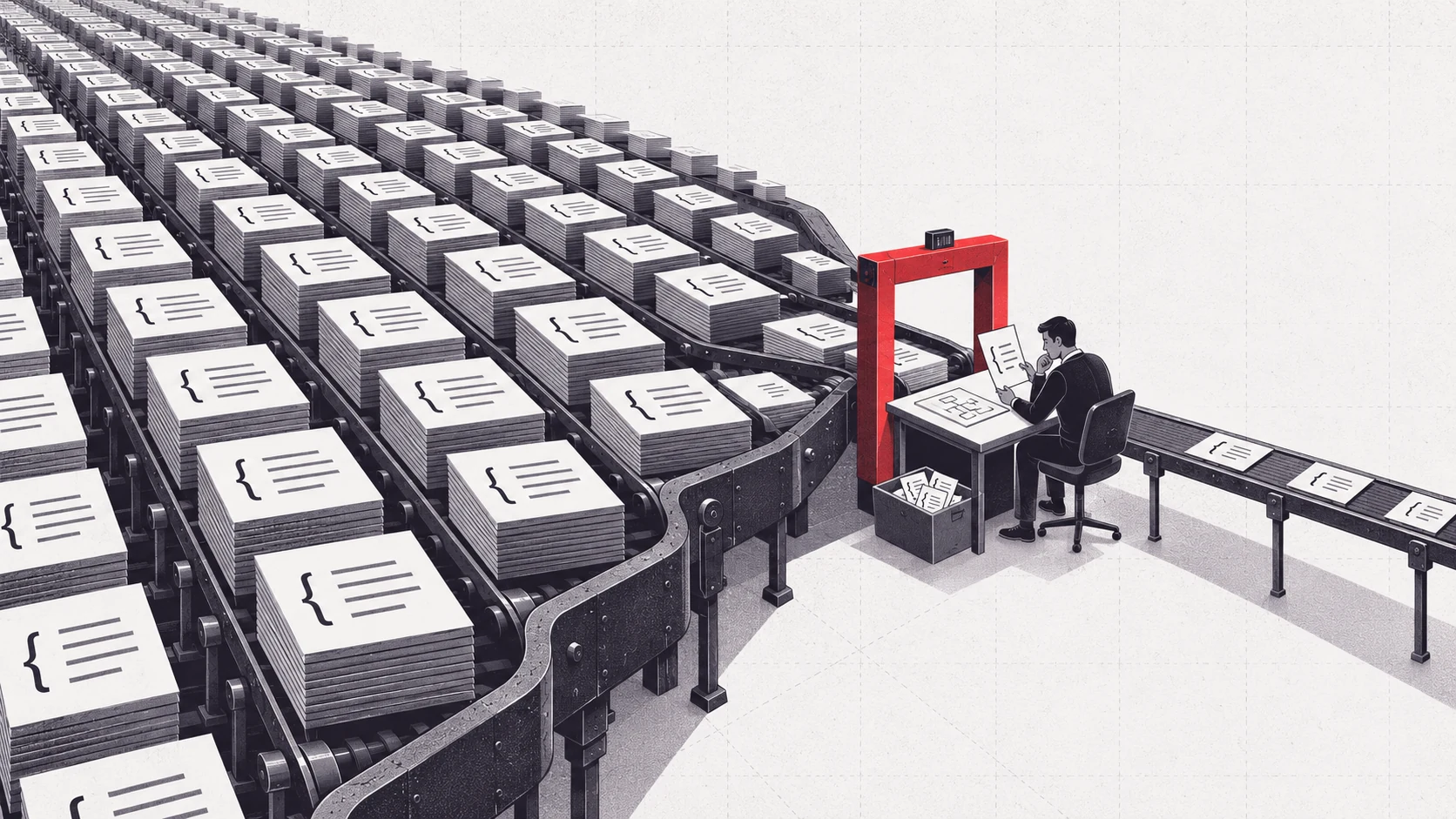
01 / The experiments
Each project has a question at its center.
Open one to see where it leads.
What changes when the product is no longer the code, but the factory that produces outcomes?
Can an AI partner become a durable command layer without taking authorship away from the human?
How do we make the reasoning and disagreement inside an agent system inspectable?
Can a portable crew of specialized agents work as a disciplined organization rather than a prompt-shaped blob?
Where should policy, tools, permissions, memory, and model routing live?
How can personal context become useful without becoming somebody else's permanent asset?
Can people learn agent orchestration through puzzles, narrative, and systems that push back?
02 / Across the lab
A shared chronology across the projects.
The orchestration graph can be rendered through LangGraph-compatible views while the canonical mission record remains the system of record.
The coordination plan preserves one canonical record while treating external graph tooling as optional and read-only.
Mission topology and live execution state are separated so each can remain legible.
Disposable worker agents provide bounded parallel capacity beneath accountable specialist agents.
Sandboxing, recovery, tool semantics, and state handling are treated as part of the governed system.
03 / On the page
Field notes and longer arguments, connected to the work that prompted them.
Why orchestration, policy, context, and verification are becoming more strategically important than any single generated artifact.
What durable partnership requires beyond context-window accumulation.
Why an agent system needs a legible social and decision layer, not only traces.
04 / Longer thinking
Essay
We built interfaces for human eyes because humans were the actors. As agents become the operating surface, the assumptions beneath product design begin to move.
Read moreEssay
Cheap production does not remove engineering. It moves the scarce work into specification, context, verification, and the design of systems that can fail without taking the building with them.
Read more05 / A spanner in the works
06 / Behind the work
I’m Ezra Ter Linden, a systems architect and engineering leader exploring what happens when AI becomes part of how we build and operate software.
This is the notebook: experiments, architectural turns, unfinished ideas, and lessons worth carrying into the next thing. The project repositories can stay private while the thinking finds a wider audience.
Find a question worth following